Health and Safety Policy for Flat Clearance Staines
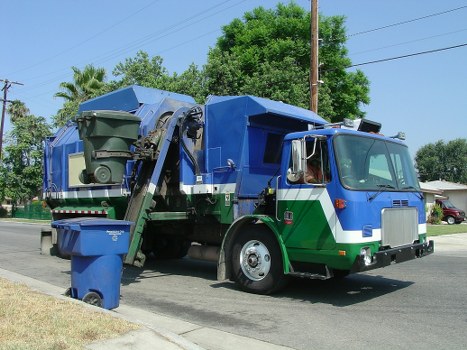 This Health and Safety policy sets out the commitment of Flat Clearance Staines to deliver safe, compliant and reliable flat clearance and rubbish removal services across our service area. The policy applies to all employees, contractors and visitors engaged in any clearance, clearance service or waste removal activity provided by the company. Our aim is to prevent harm, reduce risk and promote a culture where safety is integral to everyday operations.
We recognise that the nature of flat clearance and rubbish collection involves manual handling, vehicle movements, interaction with the public and occasional handling of hazardous materials. The policy covers routine clearing work as well as one-off large-scale removals, and emphasises training, competence and the provision of suitable personal protective equipment (PPE) to mitigate hazards.
 All personnel must follow safe systems of work developed from risk assessments and method statements for each task type. Key requirements include a clear job brief, site-specific risk identification, supervision where necessary and adherence to safe manual handling techniques. Supervisors will ensure that team members are briefed before work begins and that any changes to circumstances are communicated without delay.
Risk management is central to our rubbish removal and clearance operations. We commit to: conducting written risk assessments for tasks that present significant risk; implementing control measures to eliminate or reduce hazards; and reviewing assessments whenever conditions change. Control measures include safe stacking, segregation of wastes, use of appropriate lifting aids and avoidance of lone working in high-risk situations.
 Training and competence are mandatory. Staff receive induction training, refresher sessions and task-specific instruction for hazardous waste handling, electrical disconnection awareness, and safe use of vehicles and equipment. We maintain training records and ensure that only competent operatives undertake specialist activities such as working at height, moving heavy furniture, or dismantling fixtures.
Emergency procedures are in place to deal with medical incidents, fire, spillages, and discovery of unexpected hazardous materials. Employees are instructed to stop work and inform their supervisor if they suspect asbestos, sharps, biohazardous waste or chemical residues. Where hazards beyond the team’s competence are identified, work is suspended and specialist remediation is arranged.
Operational Controls and Safe Working Practices
 Vehicle and site safety measures are enforced to protect staff and the public. Vehicles are regularly inspected and maintained, loads are secured to prevent shifting, and drivers are trained in safe loading and unloading procedures. Loading bays, pavements and access routes are kept clear whenever possible and traffic management controls are applied on busier sites.
We use a hierarchy of controls to manage risks: elimination where possible, substitution, engineering controls, administrative controls and PPE as a last line of defence. Examples include removing hazardous items before manual handling, using trolleys and mechanical aids, implementing exclusion zones, and providing gloves, high-visibility clothing, respirators and protective footwear as appropriate.
 Contractor management and subcontracting are governed by our company standards. All external contractors must demonstrate adequate health and safety arrangements, risk assessments and insurance. The company will monitor performance and stop work where standards fall below acceptable levels. Inspections and site audits are carried out regularly to ensure ongoing compliance.
Reporting, Monitoring and Continuous Improvement
Incidents, near misses and unsafe conditions must be reported immediately using our internal reporting process. Reports are investigated to identify root causes and lessons learned. Corrective actions are recorded and tracked to completion. We view incident reporting as a key tool for continuous improvement and encourage open communication without blame.
Performance indicators include incident rates, audit findings, training completion and corrective action closure. Senior management review safety performance monthly and take actions to address recurring issues. Audits and periodic reviews ensure that the policy remains current and effective for our rubbish company operations across the service area.
Responsibilities are defined at all levels. Management provides leadership, resources and oversight. Supervisors ensure safe systems are implemented on site. Employees are required to cooperate, use provided PPE, follow instructions and take reasonable care for their own health and safety and that of others. This shared responsibility supports a robust, practical approach to safety across every clearance project.
In summary, Flat Clearance Staines commits to providing a safe working environment for flat clearance, waste removal and rubbish collection activities by applying structured risk management, training, safe equipment use and active monitoring. The policy is reviewed periodically to reflect operational changes and continuous improvement in health and safety practice.